Solar radiation and aircraft electronics: is this a big issue?

Much of the world’s fleet of about 11,000 Airbus A320 series aircraft – the most popular airliner in the world according to sales – are affected by a current emergency airworthiness directive from the European Union Aviation Safety Agency and the US Federal Aviation Administration requiring that operators modify their aircraft control software to make it more resistant to the effects of solar radiation.

This followed a sudden loss of height in the cruise involving a JetBlue A320 en route from Cancun, Mexico to Newark, USA on 30 October. Solar radiation is believed to have been responsible for corrupting the data in one of the aircraft’s flight control computers causing the sudden height loss – which injured several passengers. Recovery action by the pilots ensured the aircraft diverted safely to Tampa, Florida.

Most younger A320s need only a quick software patch to harden the microchip resistance in their flight control computers against particularly vigorous bursts of solar radiation, but nearly a thousand of the oldest aircraft may need to change the units.

Solar radiation is known to be able to interfere with GPS signals, radio communication, inertial navigation systems, autopilot, and full-authority digital engine controls (FADEC), although incidents are rare. A mysterious sudden pitch-down by a Qantas A330 in the cruise over Western Australia in October 2008 is now reckoned to have been caused by corrupted data from an air data inertial reference unit (ADIRU) that may have been subject to solar radiation damage.

All aircraft are more vulnerable than suface vehicles to solar radiation effects because, at high altitude, there is less atmospheric attenuation of the sun’s electromagnetic energy. Polar flights are particularly vulnerable because the earth’s magnetic field provides less shielding and the troposphere is at a lower altitude there.

A320 series aircraft have three three flight control primary computers (FCPC), two flight control secondary computers (FCSC), and a flight augmentation computer, all of which provide considerable systems redundancy, plus a cross-checking capability to detect and correct anomalous data.

The UK Civil Aviation Authority said today that there had been virtually no disruption to flight schedules because airlines were so quick to apply software fixes.

1 December 2025: a statement from Airbus on this date claimed that only about 100 A320 series aircraft remained to receive the softwear hardening required by EASA an the FAA.
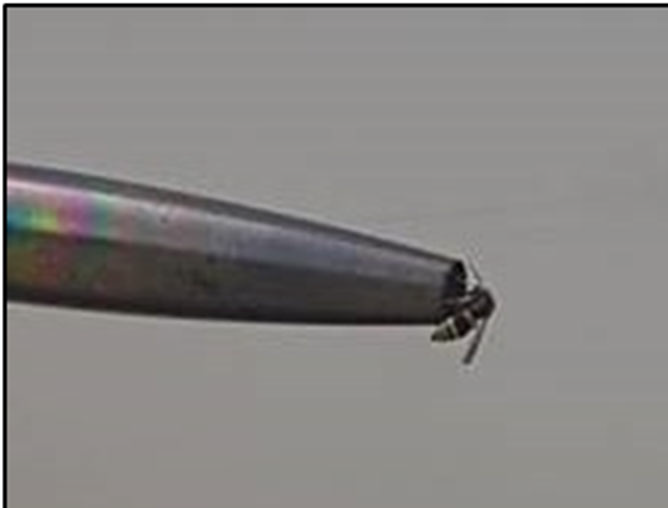
Waspish problems at Heathrow

Apparently insect life at London Heathrow airport has vigorously regenerated during the pandemic lockdowns. This has forced the UK Air Accident Investigation Branch (AAIB) to embrace a new science: entomology.

Over about 6 weeks in June and July 2021 two jet crews at Heathrow had to reject take-offs because of unreliable airspeed readings, and several more had to taxi back to their stand because their aircraft’s air data inertial reference unit (ADIRU) had detected anomalies in data from pitot/static sensors. Aircraft involved included Airbus A320 and A330 series, and Boeing 777 and 787 series.

The main reason, of course, is insects (mainly wasps, it seems) nesting in pitot tubes. This is not a new phenomenon, but the summer 2021 burst of particularly intense insect activity raises numerous questions beyond the obvious flight safety ones. As the AAIB puts it: “Proactive habitat management and aircraft monitoring will be required to mitigate the risk. With the move towards ‘greener’ aviation, this may become even more important in the future. ”

In the old days they’d just have sprayed the place with DDT.

The question is, what prompted this “infestation”? The AAIB explains that it appears to be the result of “reduced traffic levels and human activity resulting in a surge of insect breeding during the pandemic lockdowns.

“With less aircraft activity, including less noise and jet efflux to deter the insects, the parked aircraft made an attractive opportunity, with the pitot probes providing an ideal construction site for nests.”

The agency points out that the Heathrow area is an air pollution hot spot not only because of air traffic, but heavy local motorway and urban road traffic also. All of these pollution contributory factors, however, were considerably reduced during the lockdown periods of 2020 and 2021.

Perhaps in 2022, as the pandemic threat recedes and air movements increase, aviation itself will chase the insects away? The AAIB’s recently gained entomological expertise has led it to believe this will not be so – or certainly not this year: “The high level of insect activity in 2021 could lead to a larger number of insects emerging in the spring of 2022. Therefore, even though traffic levels and aircraft utilisation are expected to increase in 2022, the seasonal risk of insects blocking pitot probes could be significant.”

Wasps like pitot tubes

An additional factor encouraging insects to make their nests in aircraft has been simple opportunity: the larger numbers of aircraft parked for longer periods. Pilots and operators of light aircraft operating out of sleepy country airfields have long known that their pre-flight walk-rounds must include inspection of any crevices or hideaways. Even birds have been discovered nesting in engine bays, having found their way in via the cooling air intakes.

Despite the fact that most pilots have suffered a pandemic-induced loss of flying practice, none of this rash of insect-caused unreliable airspeed incidents at Heathrow has led to an accident. To ensure this remains true, the AAIB has recommended an “enhanced use of pitot covers or additional pre-flight inspections.” The airlines and their crews were already doing that!

This issue remains current as far as the AAIB is concerned. It is working with the Natural History Museum to identify the precise wasp species involved in aircraft infestations, their over-winter domiciles, spring nesting, mating and larvae-hatching patterns.

When they have learned all this, they then have to decide what to do about the phenomenon.

Presumably without resorting to blanket pesticide use.