Leonard’s War, episode 9: the Battle of Cambrai, Christmas 1917, a blighty for the Boss, and a springtime marriage

(For previous episodes scroll down)

Dateline: Mid-November 1917, Estrée Blanche, north-eastern France.

The weather at Estrée Blanche aerodrome worsened in mid-November (1917), and fog made reconnaissance in the whole area extraordinarily difficult. 22 Squadron, still under the command of Major Leonard Learmount, was tasked with finding out what the enemy was up to around German-held Cambrai, information which headquarters badly needed for the planned British assault there on the Hindenburg Line, a heavily fortified German defensive line to the west of the town.

The Cambrai assault, which began on 20 November, was conceived by General Sir Julian Byng as a surprise attack from the west, across terrain suitable for tanks – unlike the Ypres area – and RFC close air support was part of the plan. The latter had proved highly effective toward the end of the Passchendaele battle.
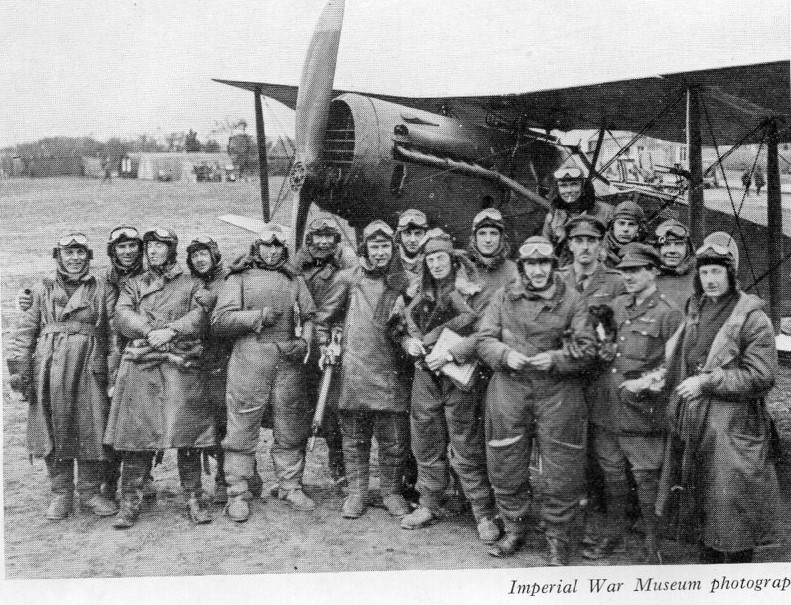
A and B Flights of 22 Squadron with a Bristol Fighter early in 1918.

Fog made 22 Sqn’s preparatory reconnaissance sorties dangerous and reduced their effectiveness. Crews transited to the Cambrai area at about 3,000ft, then descended gingerly through the fog as low as they dared, hoping to get sight of the ground and evidence of enemy movements before colliding with church spires or rooftops.

This patch of grass was the location of the Estrée Blanche mess buildings in the corner of the aerodrome, looking south west over the village. This was an agricultural and coal-mining area, and the now-grassed-over coal slag heaps are visible in the middle distance. Mounds like them took the lives of low-flying airmen when the weather was foggy.

On 20 November the Cambrai offensive began, and yielded a suspiciously successful British six-mile advance over nine days, after which it was brought to a halt. It was still short of the town, but had breached some of the defensive lines. Very quickly, however, the advantage of surprise was lost and the Germans successfully counter-attacked. By the 6th December, they had retaken much of the ground that had been won.

Air Gunner Archie Whitehouse described 22 Sqn’s role at Cambrai: “We had the unenviable job of blowing up the enemy observation balloons, strafing road transport, and making a general nuisance of ourselves. We were down low, flying through our own shell-fire to hammer Cooper bombs on the German anti-tank gun emplacements. We strafed the roads and chased horse-drawn transport all over open fields, and generally played merry hell…

“We fired hundreds of rounds of ammunition and burned out our gun barrels. We returned again and again for fuel, bombs and the reviving encouragement of Major Learmount. Thank God for the Major during those days!”

This, it seems, was about the time when the air gunner and the squadron commander reached an unspoken awareness that they had become the only two remaining aircrew from what Whitehouse called “the Chipilly mob” who were still flying on 22 Sqn. He was referring to the location at which he had joined the squadron about six months ago, in April.

It left them with a feeling of emptiness, against which the only antidote was the adrenaline summoned up by the next sortie. Whitehouse wrote: “We flew, slept, flew, slept and flew some more. We staggered back and forth to our machines, too tired to eat. No-one spoke, no-one laughed, no-one argued. Faces were lined with weariness, pitted with cordite, and daubed with whale-oil.”

Back at Estrée Blanche there was a lull in the fighting because the weather was so bad, the Cambrai advance had petered out, and Christmas was approaching. Whitehouse wrote: “The patrols were dull…compared with the hair-raising experiences of the summer. But I was feeling the strain. I did not sleep well and went off my food completely. It was only when we settled down to put on a show for Christmas Eve that I forgot my troubles.”

Whitehouse described the festive preparations: “We got up a programme that was a honey for wartime humour. Among the mechanics we had a wealth of talent, so we could put on a show worthy of any outfit out there!” They rigged up lights powered from a dynamo lorry and searched out decorations to put up.

Finally, the dinner on Christmas Eve: “The officers, led by Major Learmount, came in and served the Christmas dinner, bundled up in aprons and mess jackets and suitably armed with towels and napkins. We sang and gave cheers for everyone we could think of. There never was such a dinner or so much fun!”

Learmount in his RAF uniform. The RFC, a corps of the army during most of the war, became the nation’s autonomous air arm on 1 April 1918.

Then they put on the show, with “the inevitable slightly bawdy female impersonator”, tricks, recitations and plenty of songs accompanied by piano. Marie and Annette, waitresses from the small estaminet in the village – and their mother – were guests of honour, along with quite a few other “puzzled-looking” civilians from Estrée Blanche, and they were given seats at the front near the piano. It all ended with God Save the King and the Marseillaise.

Then back to business. C Flight had to go on patrol on Christmas Day, but nothing much came of it. The Hun had chosen to be quiet for Christmas too, apparently.

On 20th January 1918 Archie Whitehouse, whose ambition all along had been pilot training and a Commission, was sent back to England to achieve both, wearing the ribbons for his newly-awarded Military Medal and a chest-full of campaign gongs. He reported in his memoire: “I lived to wear pilot’s wings and fly a single-seater fighter. I lived to see the Armistice!” He clearly felt lucky. He definitely was.

The squadron commander who had bid Whitehouse farewell was now the very last of the aircrew left from January 1917, but he had his work to keep him sane. He still had to lead 22 Squadron’s mechanics, armourers, stores-wallahs, cooks and caterers whose names he knew well, and to encourage the new, barely-trained young pilots and observers to believe in their roles and in their ability to carry them out.

On 22 January 1918 the Squadron moved briefly from Estrée Blanche to Auchel/Lozinghem, then again on 2 February to Treizennes, where losses were high and increasing. The Geman air force was venturing more over the Allied lines than they had been accustomed to do, seeking intelligence for planning purposes. It was on a patrol from Treizennes, on 9 March, in his Bristol Fighter, that Learmount got his blighty while attacking a German aircraft that was being far too successful at directing German fire onto British artillery positions. Although losing blood fast, his remarkable luck still held, and he got his Biff back to base. He was stretchered away from his mount.

From March 1918, No. 22 Squadron found itself dealing with German preparations for the imminent – ostensibly successful but short-lived – Spring Offensive. The German army, commanded by Gen Erich Ludendorff, had benefited from the transfer of huge numbers of troops from the Eastern to the Western Front, and consequently appeared to have assembled the means to mount an attack on a wide front. On 21 March the first of three separate chronologically sequenced attacks took place on different parts of the British sector of the Western Front. Ludendorff’s objective was to drive the British to the Channel coast and cut them off from French forces before the newly-arrived Americans were able to put their full weight behind the Allies.

The final push of the Spring Offensive, in late May, was aimed further south on the French-defended part of the line near the Champagne. But Ludendorff had dissipated his forces too widely and, despite gaining a significant amount of ground, he had failed to defeat the retreating British and French armies, which were able to re-group. By July the attack had ground to a halt without achieving any of its aims. This marked the beginning of a progressive collapse within the exhausted, demoralised German military.

The RFC shipped the badly wounded Learmount back to England, where he was sent to St Bartholomew’s hospital, London, for treatment. France awarded him the Croix de Guerre avec Palme.

At “Bart’s”, Learmount met “Peggy” Ball, a young nursing auxiliary charged with looking after him. Less than two months later – on 7th May – he married her in a church in Muswell Hill, north London, where her parents lived.

While Leonard and Peggy were exchanging vows, the German Spring Offensive was still advancing, but the Allied victory that (we now know) was to come in November was nowhere in sight at that time. Nevertheless, the newlyweds took a few days off to honeymoon at a pub on the banks of the River Thames, at Staines, 15 miles west of London – very rural in those days – and they went rowing together. Wedding photographs show Learmount left the church still using a walking stick.

A cutting from the Daily Mirror. Learmount, leaning on a walking stick, is leaving St James’s Church, Muswell Hill, London with his bride. He was 28 then, but looks much older. Convalescence would have to continue on honeymoon.

He was taken off the sick list on 22 August 2018 and posted to No 33 Training Depot Station at Witney near Oxford as an instructor on Bristol Fighters.

Upon his demobilisation in February 1919, Learmount returned to his trading job in the Far East. Once he was established there, his new wife and baby son, travelling by ship (of course), joined him there a few months later.

The marriage lasted a lifetime.
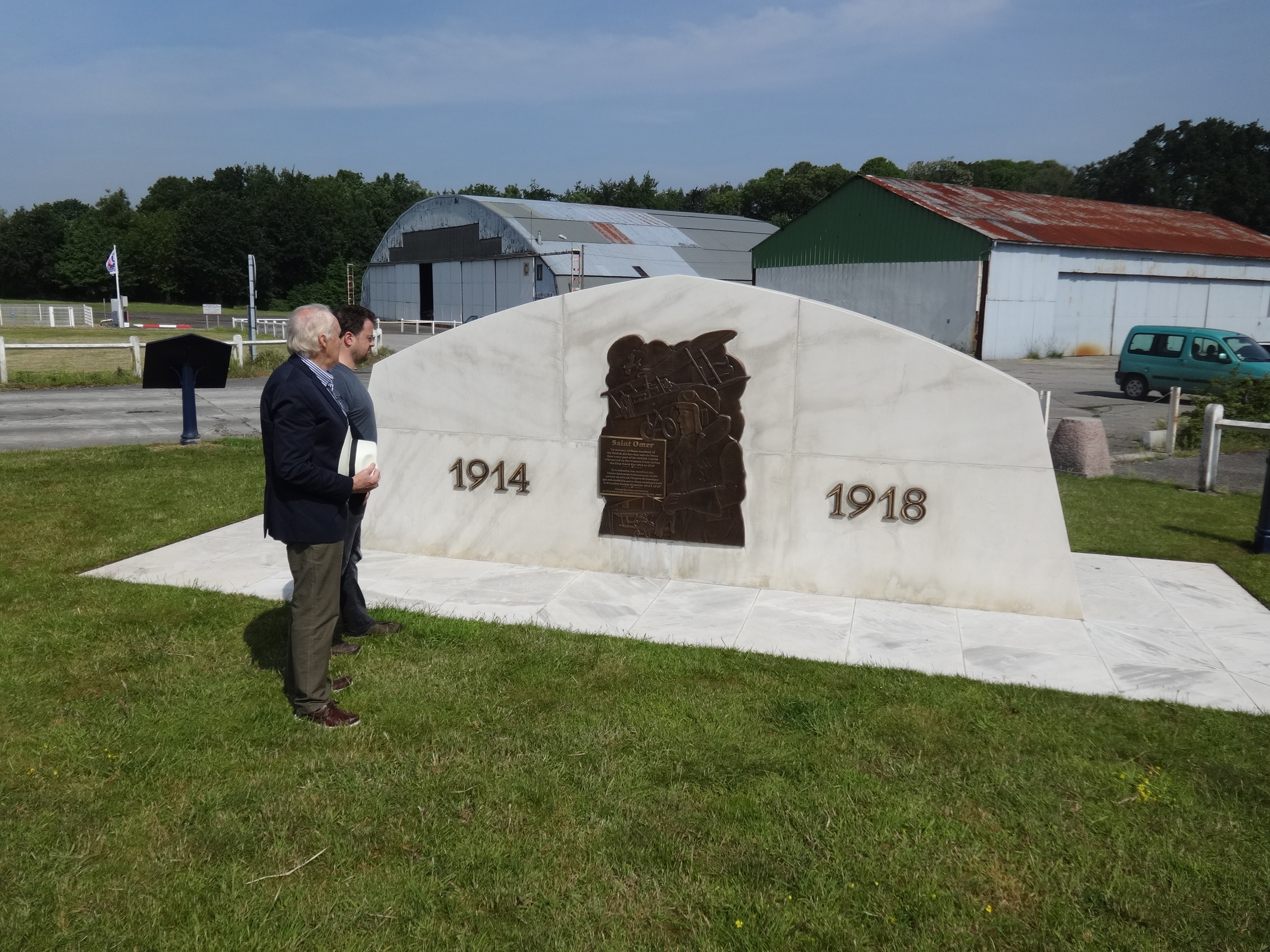
Author and son at the British Air Services Memorial, Saint-Omer aerodrome in June 2015. The memorial was erected by the First World War Aviation Historical Society in 2004. None of the buildings in view were in place during the Great War. The hangar on the left was built by the Germans in the Second World War and today is occupied by the Aéro Club de Saint-Omer. The Club keeps a museum of Great War aviation history at Saint-Omer in their hangar, and visitors are welcomed.
Learmount’s decorations. From Left: Distinguished Service Order, Military Cross, 1914-15 Star, British War Medal, Victory Medal, Colonial Auxiliary Services Long Service and Good Conduct Medal, Croix de Guerre avec Palme
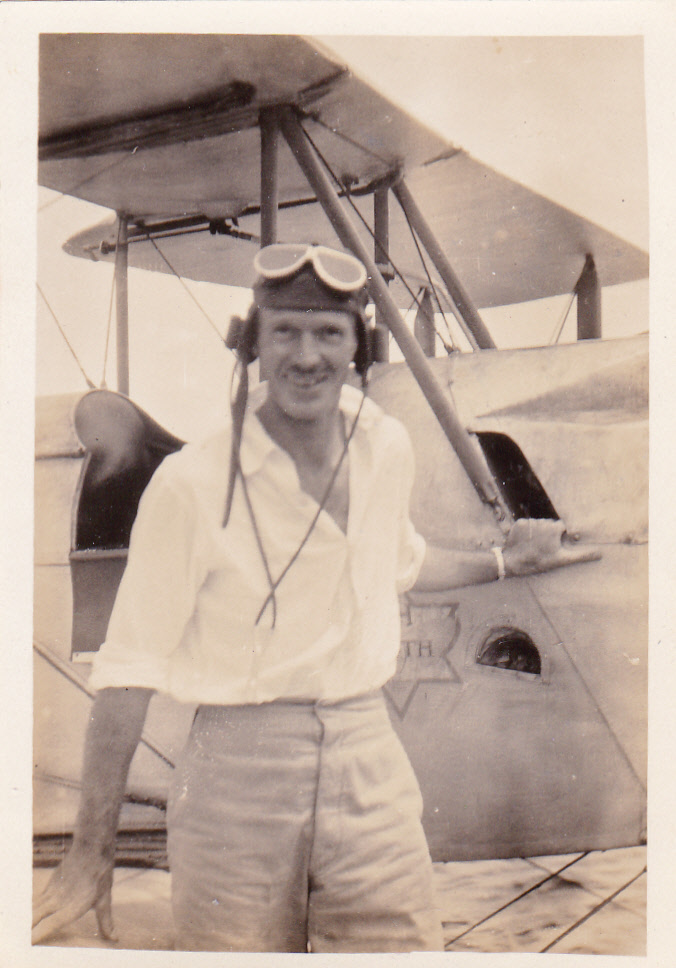
Learmount did keep flying, but for leisure. Here he is – in the late 1920s – with a De Havilland Cirrus Moth float-plane at Seletar Creek, Singapore, where he was one of the founder members of what was then called the Royal Singapore Flying Club. He also founded what was known as the Royal Selangor Flying Club in Malaysia. Both clubs still operate today under different names.

ENDS

Click here to go to Episode One of “Leonard’s War” and read it all again!
Leonard’s War episode 2: Fight and flight over Flanders

(If you missed the first episode, scroll down to find it before this one)

It was on 12 June 1915 – almost the height of summer – that 2nd Lieutenant Leonard Learmount joined his first operational unit – No 7 Squadron – at Saint-Omer aerodrome, north-eastern France. His flying log book records the weather as almost perfect for flying a wood-and-fabric aeroplane: clear with a 10mph easterly breeze.

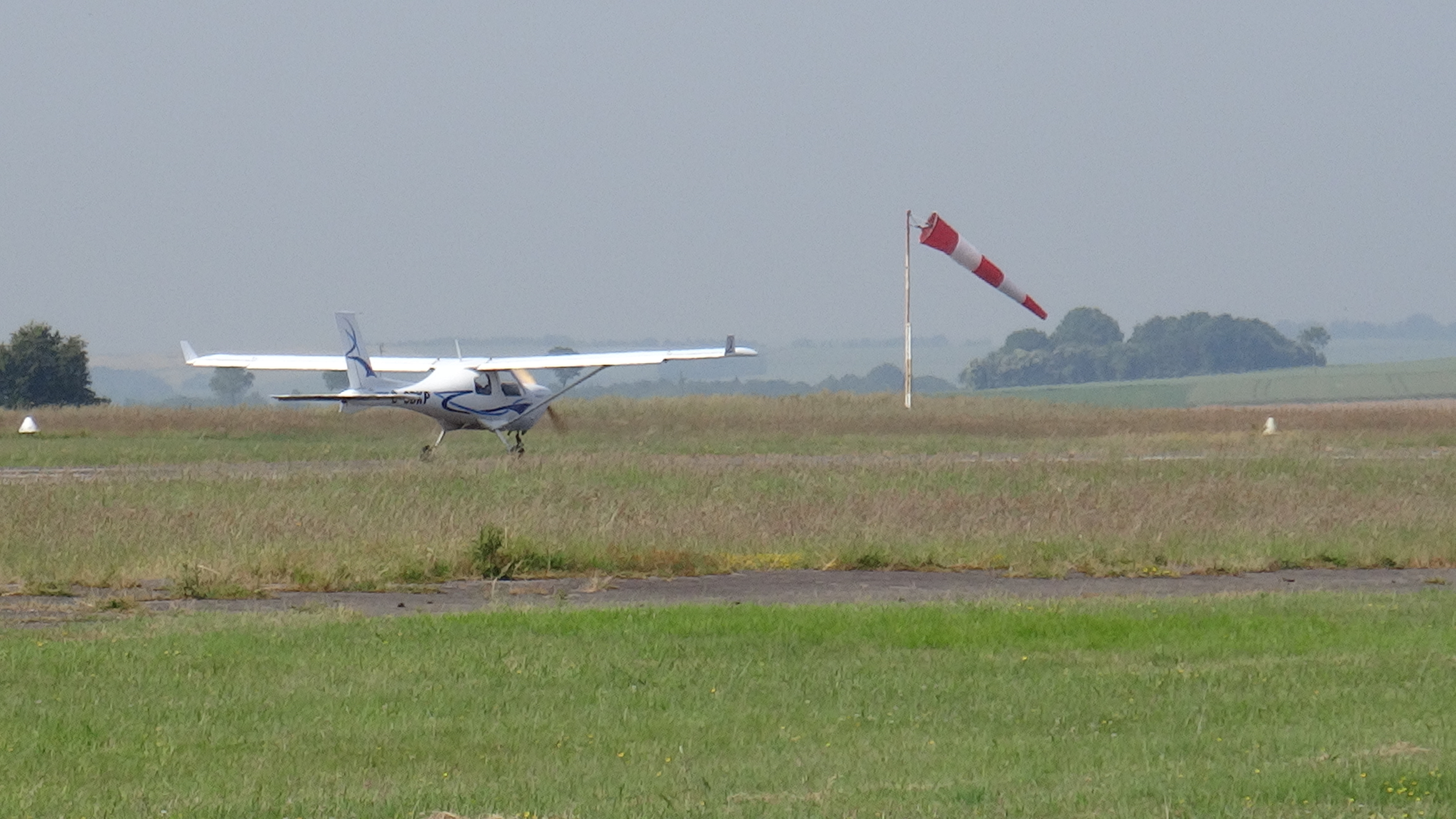
Saint Omer aerodrome 12 June 2015, exactly a century after Learmount’s arrival there. Even the weather was identical, with an easterly breeze. It still operates as the home of the Aéro Club de Saint-Omer, and one of its aircraft is backtracking for take-off from the runway’s other end.

There is no evidence that Learmount was given an aeroplane to ferry across La Manche to Saint-Omer, so we must assume that – like most men posted to France – he caught the sea shuttle from Southampton to Le Havre and took a boat up the River Seine to Rouen, thence by road to his destination.

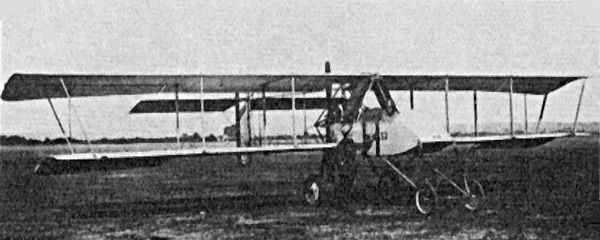
Learmount’s flying log book shows that four short trips out of Saint-Omer aerodrome on a new aircraft type were deemed sufficient for him to master its peculiarities and to complete local area familiarisation sorties. The machine he was learning to control was the French-built two-seater Voisin “pusher” biplane [engine and propeller behind the cockpit].

His first sortie consisted of 20min flying circuits, but the second trip was a brief affair lasting 10min. His log book explains: “During spirals, five ribs collapsed. Landed safely.” The instructor had taken control and put the aircraft down without delay.

The Voisin, a French two-seater pusher biplane also used by the RFC

“Spirals” were climbing or descending turns, and if the aircraft was not kept in balance by a careful combination of aileron, rudder and elevator, a spin could develop. The Voisin had a level airspeed of about 65mph, but that was only about 40mph above its stalling speed. The evidence suggests that, before the need for a formal flying training syllabus was recognised in 1916, military aviation was seen simply as a means of putting eyes in the sky for the army, and – especially at first – there was no preparation for air-to-air combat. The pilots were just seen as drivers, their task being to fly cautiously and avoid loss-of-control so as to bring their observers home safely to pass on their vital reconnaissance information.

After his final familiarisation sortie, Learmount wrote in his log book: “Above clouds, steered by compass.” He had clearly experienced neither of those things before, yet he was deemed ready for command of a two-seater aircraft operating in hostile skies above the battlefield.

The very first RFC air-to-air combat losses were reported in early June 1915. Indeed a 7 Sqn RE5 was “shot-up” and damaged at 7,000ft over Douai/Valenciennes on 6 June, and on 6 July 2nd Lieutenants LW Yule (pilot) and RH Peck (observer) in a Voisin were both wounded by “exploding cartridges” at 7,000ft near Armentiéres. Both crews successfully recovered to Saint-Omer. (Combat detail from Trevor Henshaw’s admirable “The Sky Their Battlefield”)

Air warfare tactics in that precise location not far east of Ypres were evolving, but were about to start developing at breakneck speed. Air-to-air combat was still very rare, many of the crews armed only with rifles and revolvers, and the primary mission was still reconnaissance and artillery spotting.

In Learmount’s early operational flying with 7 Sqn, he flew the painfully slow Voisin first out of Saint-Omer, and then from other aerodromes further east in the “Ypres Salient” region of Flanders, among them Droglandt. At first, he was purely carrying out reconnaissance and artillery-spotting for the army, but the Voisin was equipped with a Lewis light machine gun, so it was capable of defending itself.

Flying with Learmount on his first operational sortie in command – on 19 June 1915 – was his observer/gunner, the same 2nd Lieutenant Peck just mentioned earlier. Indeed Peck almost certainly directed his rookie commander’s sortie! His handwritten reconnaissance report (see below) records the aircraft’s take-off from Saint-Omer at dawn (04:30), and describes observed activity behind enemy lines between Courtrai and Ghent, Flanders. The pencilled words, inscribed carefully by cold hands, provide details of train and other surface transport movements, assemblies of troops and equipment and estimated numbers. The aircraft landed at 07:45am, so they had been airborne for 3h 15min.

Copy of the 19 June 1915 reconnaissance report, filed from Learmount’s first operational flight. (National Records Office)

On the ground, beneath 7 Sqn’s patrolling aircraft, a fierce German offensive was raging against the British forces holding Ypres. The airmen, pre-briefed on what the army wanted them to look out for, provided their recce reports direct to specific units on the ground. The German offensive was eventually stalled, but at huge cost to both sides.

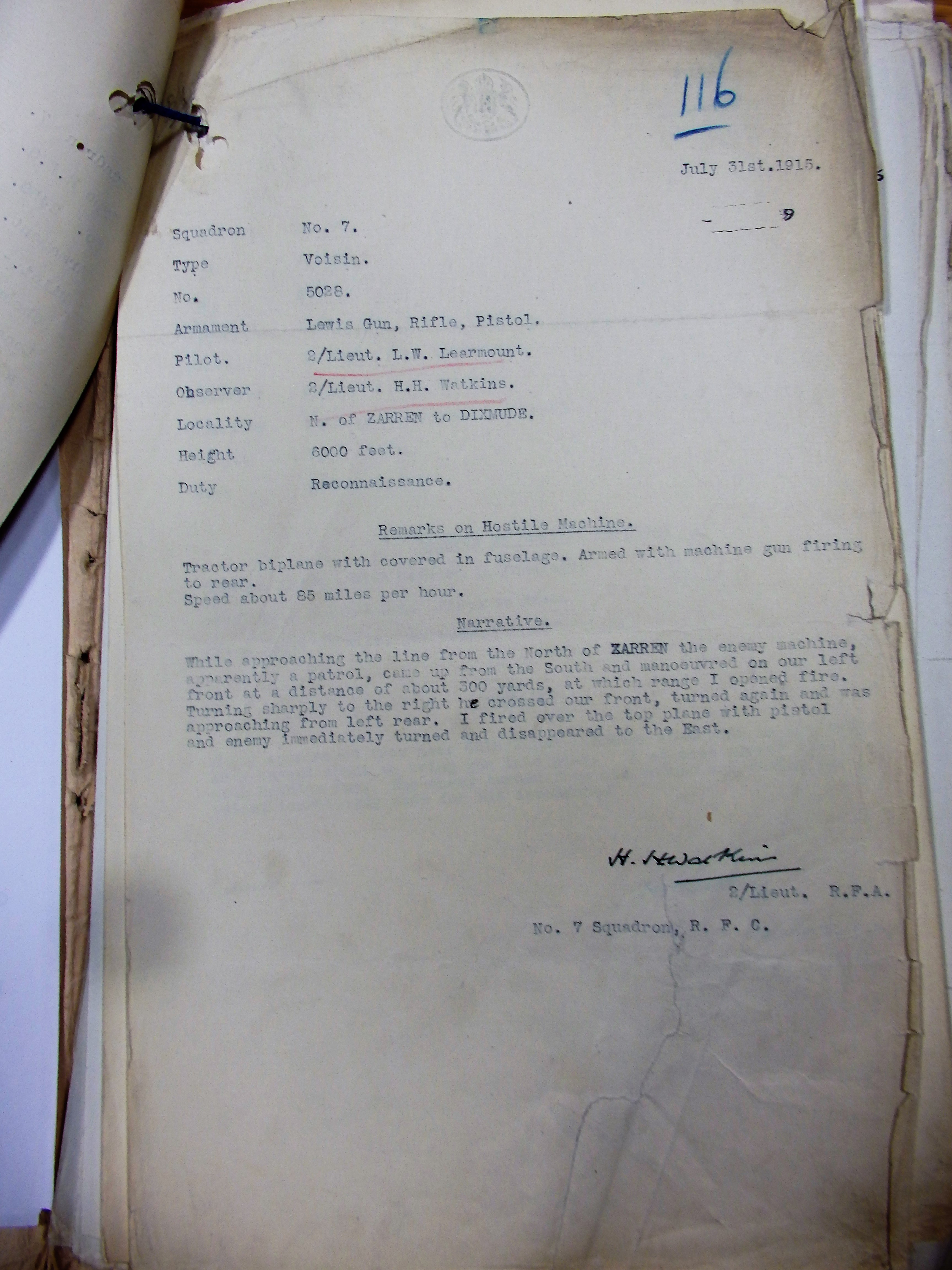
In a 31 July 1915 combat report filed by Learmount’s observer/gunner describing an inconclusive encounter with an enemy biplane, the Voisin crew’s armament was recorded as: “Lewis gun, rifle and pistol”. The observer, 2nd Lieutenant HH Watkins, initiated the hostile exchange with his Lewis gun, but the German machine positioned itself behind the RFC aircraft. Watkins reports: “I fired over the top plane with the pistol, and the enemy immediately turned and disappeared to the east.” The German aircraft was not identified by type, but was described thus: “Tractor biplane with covered-in fuselage. Machine gun firing to rear. Speed about 85mph.” This kind of encounter was common at that stage of the war, but exchanges quickly became more dramatic as Germany started to field armed fighters.

(National Records Office)

Meanwhile 7 Sqn aircraft were increasingly often engaged in air-to-air exchanges and, with the arrival of August, the “Fokker scourge” began to take its toll of RFC aircraft and crews. The Fokker Eindecker was, as its name implies, a monoplane, and it was a “tractor” (engine and propeller at the front), not a “pusher”. It was the first aircraft on either side to be armed with a forward-firing machine gun equipped with interrupter gear to enable it to fire ahead through the propeller. This made it a game-changer, and accelerated the development of air combat tactics.

The Eindecker’s armament might have caused far more problems than it did, but fortunately for the RFC the aircraft had an unreliable engine, and was difficult to fly, causing many training crashes. Thus only a small number were effectively deployable on a daily basis at front-line units. In fact it was so difficult to manage that the Germans took the Eindecker out of service in early September, but such was its known effectiveness in capable hands that it was declared operational again a few weeks later.

And the RFC’s airborne operations were becoming more varied. By early autumn, bombing sorties were more regularly executed – including against German aerodromes. For example a handwritten, undated operation order held by the UK National Records Office tasked five 7 Sqn pilots – including Learmount – with carrying out two bombing raids on Gits aerodrome in Flanders, near the Gits railway station just east of the Torhout-Roulers road. The first was to be at 7am, the second at 2pm to disrupt attempts at repair. Each aircraft normally carried two or three 20-pound bombs.

http://www.greatwar.co.uk

There was a difference between the overall aviation strategies of the Allies and Germany. Germany frequently had technology and performance advantages, but they had a significantly smaller aircraft fleet and knew it. The RFC leadership, notably the general commander of the RFC in France Colonel Hugh Trenchard, wanted the RFC crews to fly aggressively – whether trained for combat manoeuvres or not – and venture every mission into airspace over the German lines to gain intelligence and disrupt operations. The Germans, on the other hand, would work to limit their own losses by staying defensively over their lines, except for making brief, organised formation attacks to the west of the Front.

When the Battle of Loos began on 25 September 1915, No. 7 Sqn was flying out of Droglandt, 20km west of Ypres in Flanders, heavily involved in providing air support, bombing and reconnaissance for the allied troops, operating a mix of BE2c and RE5 aircraft. The Battle of Loos was a British offensive on the Western Front close to Lille, not far north of Arras which included the first British use of chlorine gas on the ground. But by 8 October the push came to a standstill against staunch German defences.

The original site of Droglandt aerodrome is in the farmer’s field to the right of the telegraph poles

Learmount himself was now mostly flying the BE2c out of Droglandt. The BE2 series had originally been designed – in 1912 – as a very stable, unarmed reconnaissance machine, and that was fine until the Germans introduced well-armed aircraft like the Fokker Eindecker. The Allies didn’t have an answer to the latter’s capabilities until early 1916, so the BE2c’s previously desirable stability made it a sitting duck (more about this in future episodes). Many were shot down but – fortunately – because they were such stable machines to handle, the crews were often able to control the damaged machine to a forced landing.

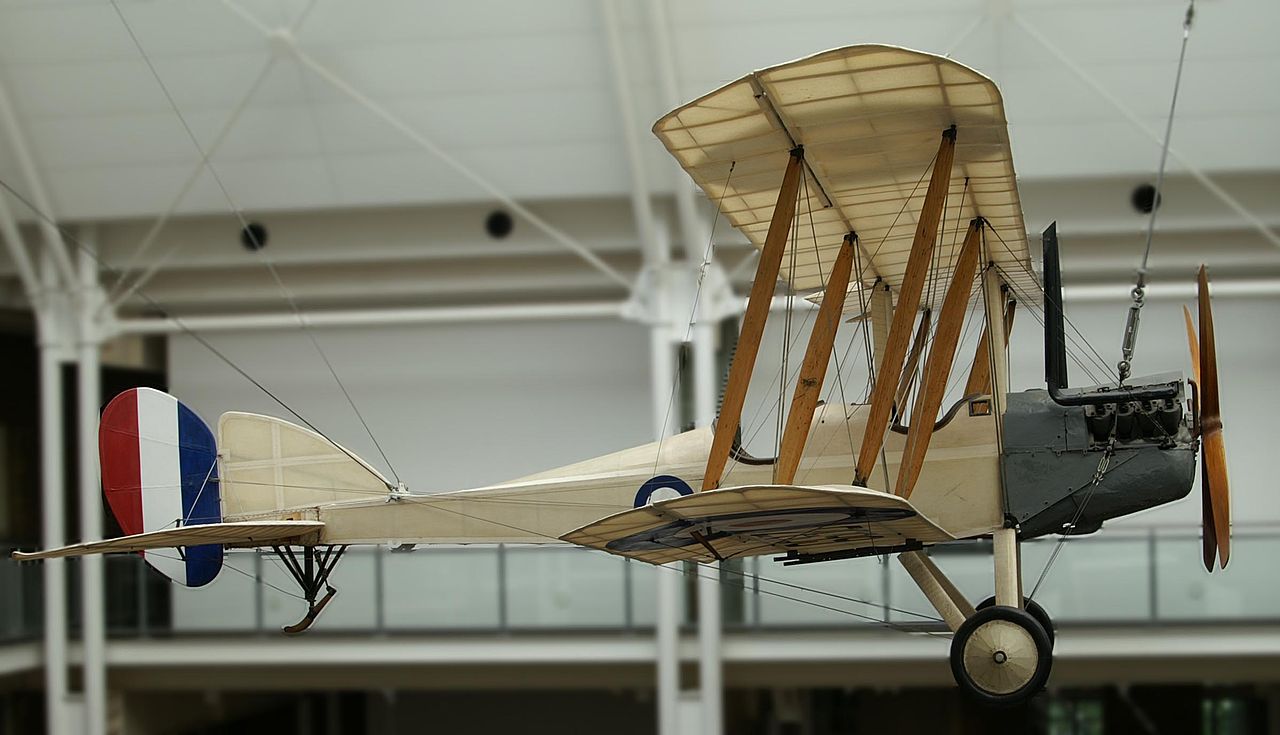
Royal Aircraft Factory BE2c at the Imperial War Museum

So many BE2cs had been built, however, that they continued to be used for reconnaissance and bombing into 1917, and crews began to dread being assigned to them.  

Meanwhile Learmount was recommended for a Military Cross. The citation lauded his general performance since joining 7 Sqn in June, but it described a specific action on the second day of the Battle of Loos: “Consistent good work, done most gallantly and conscientiously from 13.6.15 to present time. This Officer bombed and hit one half of a train on 26.9.15, coming down to 500ft immediately after Lieut DAC Symington had bombed the other half.” The train was on the Lille-Valencienne line, and Symington had achieved a direct hit on it close to its front, bringing the whole train to a halt. Just after that, Learmount dropped a 100lb bomb that made a direct hit on one of the coaches in the train’s centre.

The point about coming down to 500ft or less is that it puts the aircraft within easy range of machine gun fire, and trains were almost always armed.

Tomorrow: Episode 3, Learmount is seconded to the French Armée de l’Air to report on their development of night bombing techniques