(For previous episodes, scroll down)

In the middle of the snowy January of 1917, Leonard Learmount was promoted to Acting Major and given command of No 22 Squadron at Bertangles, about 5km north of Amiens. In his promotion from Lieutenant he had leapfrogged the substantive rank of Captain (he had been made an acting Captain during his immediately preceding command at 15 Reserve Squadron, Doncaster, a training unit, whence he travelled to France) and gone straight to Major. War seems to make military procedure much more flexible.
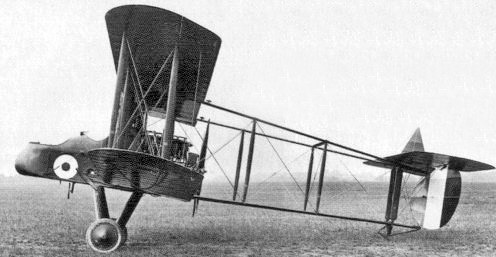
22 Sqn was equipped with FE.2b pusher biplanes – dubbed the “Fee” by its fliers and mechanics. The Squadron’s main roles when Learmount joined it were aerial photography over the German lines, and reconnaissance. In this vital role, which required steady, stable flying often at low level, it was vulnerable, so a pair of Sopwith Pup fighters were attached to the squadron to fly as escorts above the FE2b formations, able to intervene from above if German fighters attacked. At 27, Learmount was older than most of his fellow pilots, and equipped with all of 22 months’ experience of military aviation since his first flying lesson at Brooklands.

At the end of April 22 Sqn moved east about 20km from Bertangles to Chipilly, an aerodrome a few kilometres south of Albert and just to the north of the River Somme. During a few days sojourn there before moving further east to Flez, a new young American volunteer, AGJ (Archie) Whitehouse, who had just transferred from the army to 22 Squadron as an Air Gunner Second Class, brought to his first squadron a useful familiarity with firearms he had won both as a soldier and back at his childhood home in the USA. He was about to put that skill very successfully to use in the air, in charge of a Lewis light machine gun mounted above the front edge of his slipstream-blasted, canoe-like work-space in the nose of the Fee. His “foot-bath”, as he called it, was immediately forward of the pilot’s rather deeper cockpit.
About ten years later Whitehouse, who kept a diary at the front, was to publish a memoire of his time on No 22 Sqn called “Hell in the Heavens”. Some of the experiences recorded here are from Whitehouse’s book. While there is no reason to doubt his tales of squadron life, and the airborne experiences he describes, the precise chronology of events he records – including 22’s migration from one aerodrome to another from time to time – is not reliable.
The Fee itself was stable, reliable, could take a lot of damage and still fly, but rather slow. Its strong point was that the pilot and observer/gunner had a completely unobstructed view forward, laterally, above and below, which was excellent for 22 Sqn’s main roles – reconnaissance and aerial photography. In fact the Fee has – by a modern RFC historian – been dubbed the RFC’s MRCA (multi-role combat aircraft, the name given to the joint European strike aircraft project that ultimately became the Tornado). Also the field of fire from its two pivoted Lewis guns was excellent in all directions except in its blind spot directly behind and below the tail. The observer’s gun was on the forward lip of his “tub”. The other – on a higher mount just ahead of the pilot – could either be fired forward by the pilot, or used by the observer to fire backward over the upper wing. So the Fee, although not designed as a fighter, could defend itself.
The day Whitehouse reported to Chipilly, he describes himself walking between the mess huts and canvas Bessonneau hangars when he heard a wailing sound, looked up and saw the silver fuselage and tailplane of a No. 2 Squadron Nieuport Scout diving toward the ground, its wings torn away and flailing separately to earth. Nieuports were fast, nimble French single-seaters, but if a pilot pulled too hard the wings would come off, and this time they did.
Unfamiliar with what he was witnessing, it took Whitehouse a moment to realise the Nieuport was coming straight at him, and he began to run for cover between the hangars. The wingless hull smashed into the hardened area just in front of them. He must have dashed over, because he found himself pulling frantically at the fur coat containing the mangled corpse of the pilot, before somebody swore loudly at him and pulled him away.
They said the pilot was the CO of No 2 Squadron, which was co-located with No 22 at Chipilly, and speculated that he was showing his aircrew what the Nieuport could do. Whitehouse watched while a crew grabbed the corners of the fur coat and pulled the human remains clear of the wreckage so the squadron would have something to bury. Whitehouse himself was told to clear off, so he continued to the orderly room to report for duty.
Whitehouse had received no training for the air. He reported to stores and was issued with his sheepskin flying kit and goggles. An attempt by the stores team to wash away the blood of a former owner had not completely succeeded.
As soon as the new gunner had carried the kit to his Nissen hut quarters, one of the flight commanders, a Canadian called Capt Carl Clement who was C Flight Commander, put his head around the door and told him to get kitted up for a sortie that would be ideal for “getting his air legs in”.
Whitehouse’s first experience of leaving the earth’s surface was to be on a post-maintenance engine test flight. Once airborne, Clement shouted at him to tell him that, on the way back, they’d pass over the aircraft-shaped practice target on the ground near the aerodrome perimeter so Whitehouse could fire the Lewis gun at it.
To direct the gun properly Whitehouse had to get on his feet, blasted by the slipstream from his knees upward. No harness, no parachute. Standing would enable him to pivot the Lewis gun widely on its mounting. He was understandably reluctant, so Clement reached forward over his cockpit coaming and yanked him by the collar to persuade him to get up. When he finally did, the Lewis gun became both his weapon and his support – the only thing he had to hold on to. “I realised how it feels to be standing on the edge of … nothing.” But then, when Clement dived steeply at the practice target, Whitehouse filled it with lead. Clement was impressed and told him so.
Tomorrow’s episode 6: Whitehouse logs more spectacular airborne time



 Learmount.com