British military systems manufacturer BAE Systems is beginning assembly of the sole demonstrator for the tri-national Global Combat Air Programme (GCAP) crewed sixth-generation strike fighter. The programme, conceived a decade ago was finally given the green light by all three partners – the UK, Japan and Italy – two years ago.
Meanwhile, also early in June another planned tri-national (France, Germany and Spain) Future Combat Air System (FCAS) programme involving Dassault and Airbus Military collapsed because the corporate and political parties to the plan could not agree on work-share and leadership. Germany’s president Friedrich Merz had also questioned whether a crewed aircraft was appropriate in a sophisticated artificial intelligence-directed future, and remarked that individual European states had different requirements.
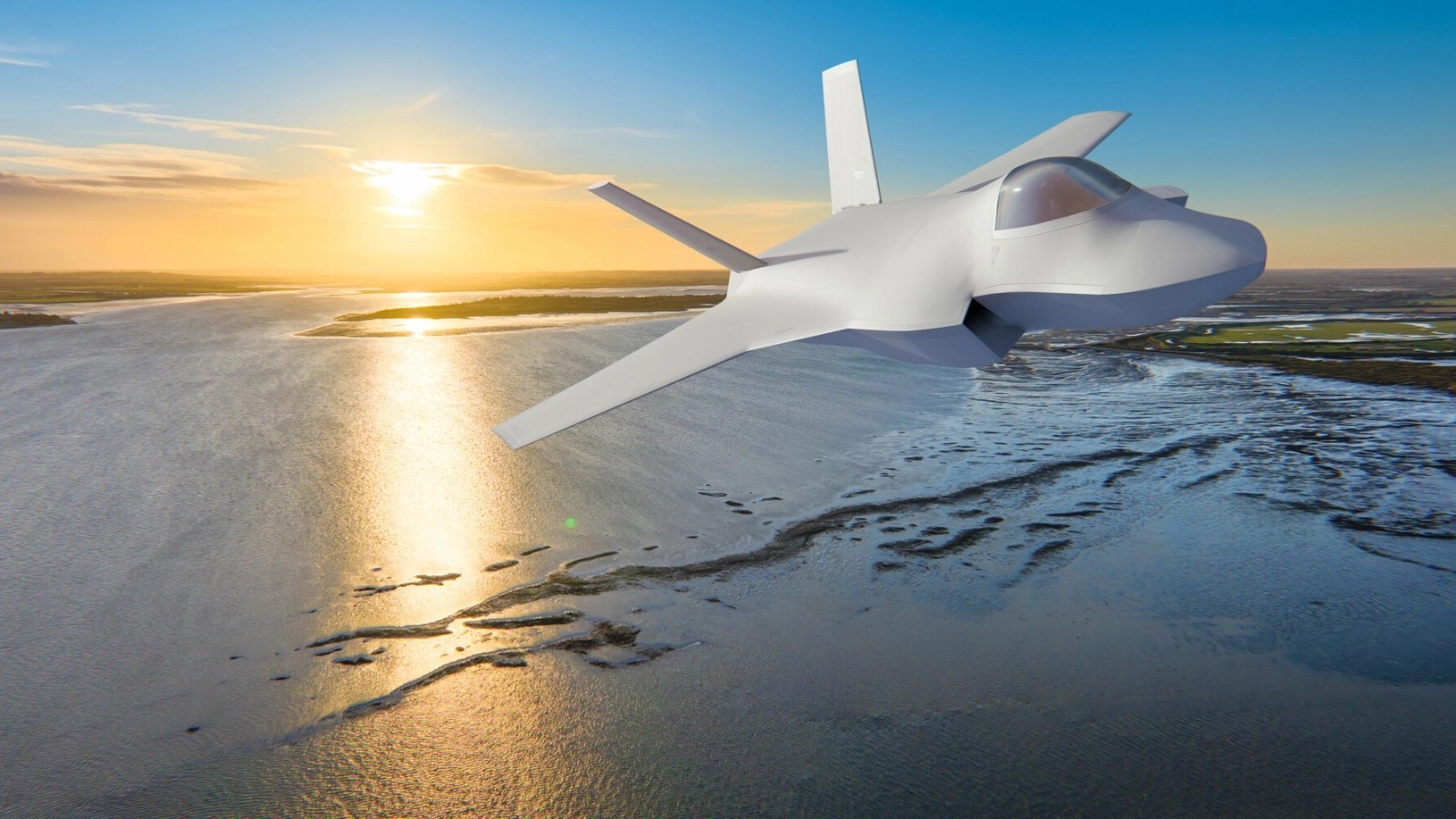
As the planned European FCAS plan collapsed, the fuselage and aerostructures for the GCAS demonstrator were being put together at BAe’s plant in Samlesbury, Lancashire. The demonstrator will enable the company to trial GCAS’ advanced low-observable (LO) airframe characteristics, enabling them to identify design snags at a pre-production stage.
Later this year the work will be transferred to BAE’s nearby Warton plant where manufacture will take place. The company hopes to announce a demonstrator first flight in late 2027 or the following year. The aircraft’s Rolls-Royce EJ200 engines and its Martin-Baker crew escape system had previously completed testing.
Eight years ago, at the 2018 Farnborough Air Show, I attended a BAE presentation on the GCAS projected systems, and occupied the pilot station wearing a very smart helmet containing a futuristic virtual cockpit. I described the experience here, and predict what real military pilots will have at their fingertips. A pricipal justification for having a crewed aircraft in the age of accelerating artificial intelligence (AI) is just that: controlling AI output requires a human to be in the loop.
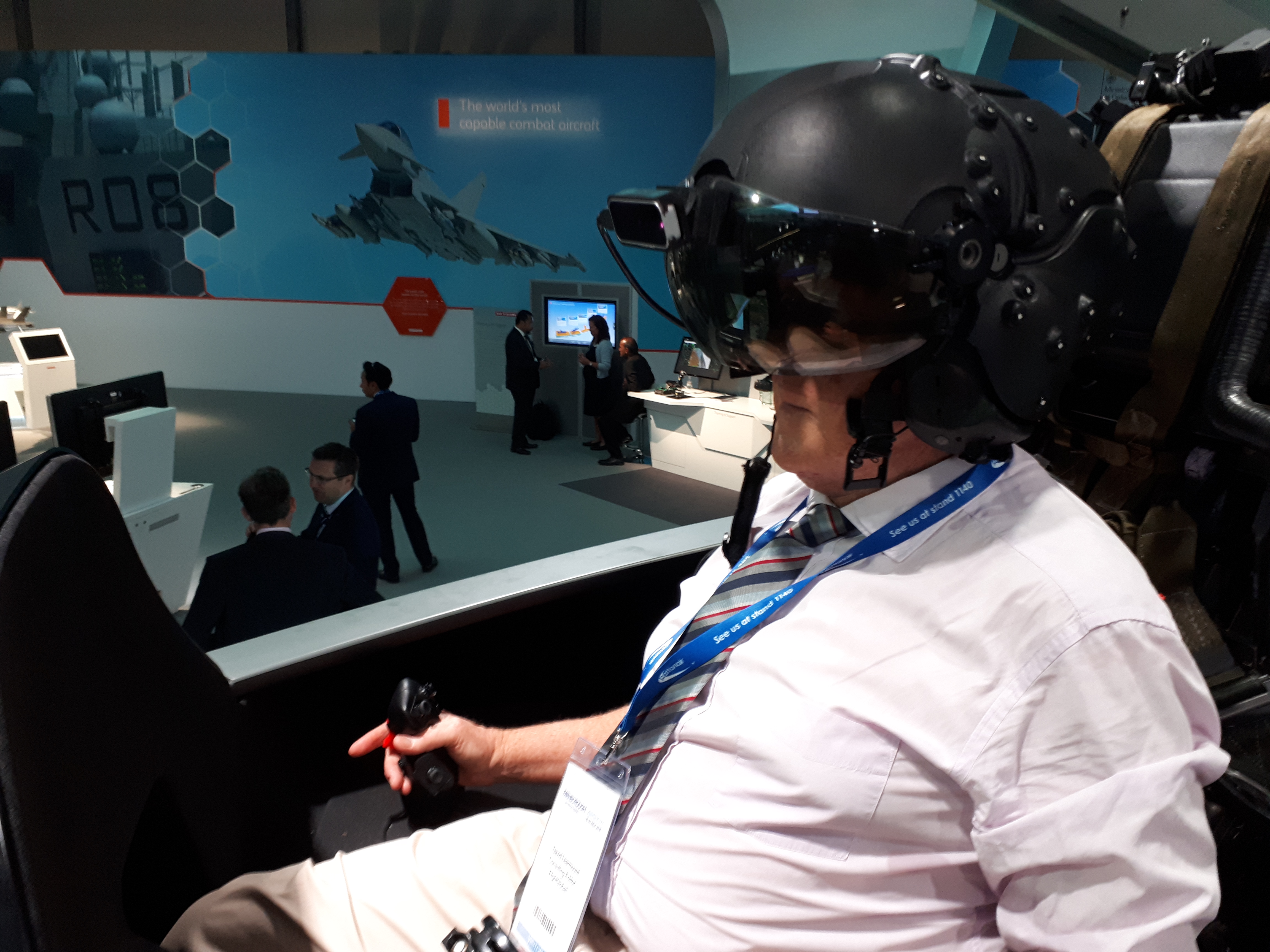
Learmount in BAE’s GCAS mock-up at Farnborough in 2018
In June this year FlightGlobal visited the Samlesbury site to witness BAE’s work. Tony Godbold, BAE’s delivery director for the UK’s broader Future Combat Air System (FCAS) effort, explained: “We are all excited to get this thing airborne, but safety and airworthiness certification is an absolute paramount for us to get right.” He says that the lessons learned though constructing and flying the demonstrator will shorten the time taken to production, and the length of the testing process. Operational service entry for the GCAS, to be called Tempest by the RAF, will be in 2035.
More detail about the GCAS programme is expected to be made public at the 20-24 July Farnborough Air Show.
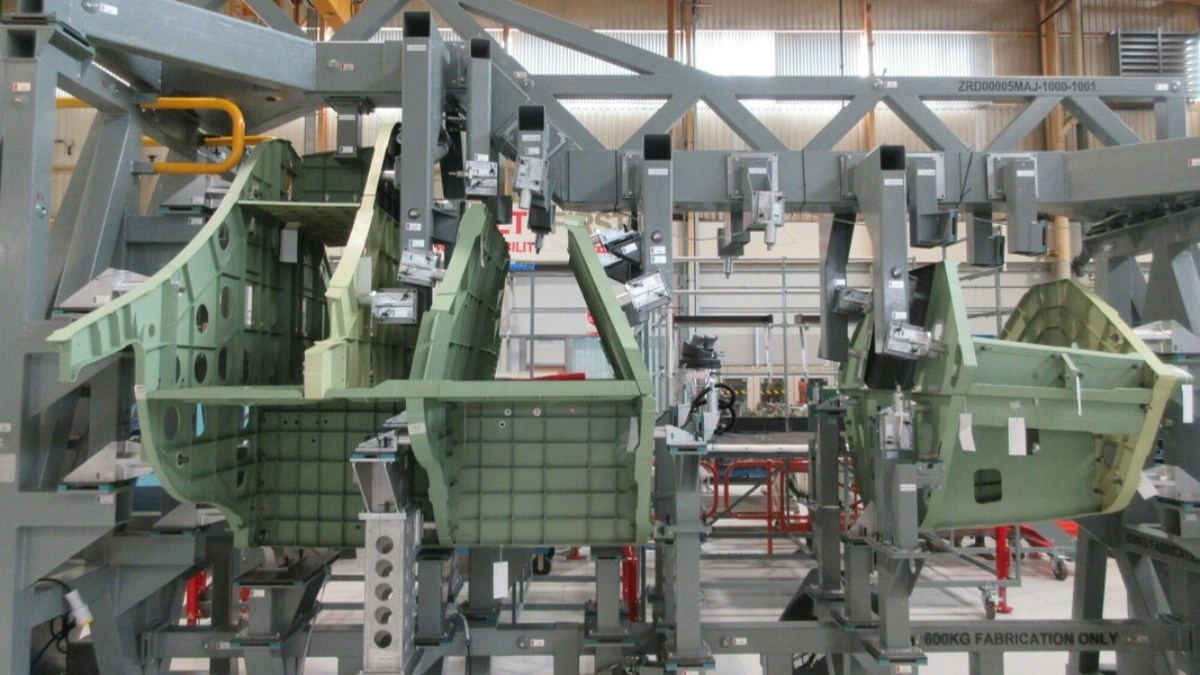
The GCAS demonstrator shape emerges at Samlesbury

