MH370 search: winter may make it un-viable

The Australian Transport Safety Board reports that the search for the missing Malaysia Airlines flight MH370 is increasingly likely to be compromised by bad weather as the southern hemisphere winter advances.

The latest ATSB report says: “Poor weather conditions prompted the crew of Fugro Discovery to recover the deep-tow vehicle and go to weather avoidance on 8 May. The vessel is expected to depart for Fremantle later today.

Fugro Equator departed Fremantle for the search area on 6 May but poor weather has slowed transit to the search area. The vessel is anticipated to arrive on 11 May but weather conditions in the coming days are expected to preclude search operations.

Dong Hai Jiu 101 completed testing of the SLH‑ProSAS‑60 deep tow system and departed for the search area on 10 May.”

The sea conditions report speaks of 12m high waves and 50kt winds, but the Board says searches will resume whenever the weather permits.

This does not sound promising because the search is nearing its end, as the ATSB explains: “It is anticipated this will be completed around the middle of the year. In the absence of credible new information that leads to the identification of a specific location of the aircraft, Governments have agreed that there will be no further expansion of the search area.”

But if they do find the wreckage within the remaining search area, Malaysia, China and Australia are committed to recovering it all.

Past and future merge at Farnborough’16

The Farnborough International Airshow 2014 Farnborough Air show- 2014. Photo By Phil Weymouth- Streetlight. Bahrain. philweymouth@me.com
Farnborough aerodrome and show site

In July the Farnborough International Air Show will reflect an accelerating world aerospace industry while celebrating and drawing inspiration from its roots.

At the 11-17 July Show one of the world’s great aerospace companies – Boeing – while flying its latest products in the display will also celebrate 100 years of building commercial and military aeroplanes. The company is proudly fielding a Centennial Pavilion to parade its achievement milestones.

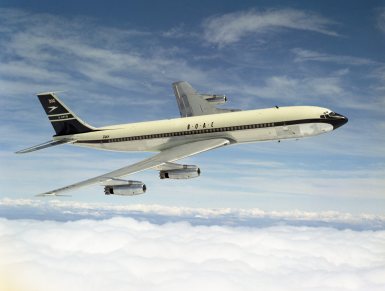
BOAC Boeing 707
Boeing’s classic 707 in BOAC livery. The jet airliner that, in the 1950s and ’60s, set the standards for the future

Meanwhile Farnborough International (FI) has just previewed a major development of its historic airfield site.

The company reveals that, in time for the 2018 Show, it will open a new purpose-built, permanent exhibition and conference centre less than 100m from the point where pioneer Samuel Cody took to the air in his British Army Aeroplane No 1 in October 1908, the UK’s first heavier-than-air flight.

Little more than a decade ago Farnborough aerodrome still looked, in some respects, as it did in the 1920s. Now, although most of the historic hangars and structures – like the wind-tunnel – have been preserved, they are dominated by 21st century glass and steel architecture as high-tech enterprises move in, and TAG Aviation’s elegant control tower and hangar/terminal complex define the airport horizon. Even the exhibition halls and chalet lines familiar to Show regulars are increasingly constructed to be permanent.

3 entrance view exterior_LR_AB
Farnborough International’s state of the art conference and exhibition centre to open in 2018

FI commercial director Amanda Stainer confirms chalets and exhibition stands will be sold out for the 2016 show. She says 67% of exhibitors will be international, 33% British, and the event will see its biggest ever participation by China, among 22 countries that have set up national pavilions.

FI has enhanced special reception facilities for delegations, and the proven “meet the buyer” enabling programme for small and medium enterprises will again be active.

Also repeated at Farnborough this year is the Innovation Zone, a showcase for gestating ideas looking for backers and buyers.

And Friday is designated Futures Day, intended to concentrate on the young generation, inspiring them to choose studies that will take them into the exciting world of aerospace engineering, design and operations.

Then as usual, on the final weekend, the public days are a time-honoured acknowledgement of the importance to the industry of generating public enthusiasm for all things aviation.

The air display detail has not yet been finalised, but there will be 3h 30min of it each day, ranging from the Lockheed Martin F35A and F35B Lightnings on their UK show debut to another unusual debutante, Hybrid Air Vehicles’ Airlander, a highly manoeuvrable airship that also generates aerodynamic lift.

The weekend display will show 50 aeroplane types, also including the Red Arrows, the Battle of Britain Memorial Flight, a P51 Mustang, Catalina amphibian, plus energetic manoeuvring from a Pitts Special and other crowd-pleasers.

Farnborough also presents the UK Drone Show for the first time this year, demonstrating drone racing for sport, providing participative drone piloting simulation, and aiming generally to raise drone safety awareness. The slogan pushing drone safety says it all: “Don’t fly a toy, be a Drone Pilot”.

The romance of aviation is clearest when the brilliance of today’s aviation engineering is seen in its historic context, and to that end the RAF Museum will man a stand at the Show this year, heralding the RAF’s centenary to be celebrated at Farnborough 2018.

Meanwhile the historic aerodrome site’s own extensive legacy is guarded by the Farnborough Air Sciences Trust, founded to “make available to the public the story of Farnborough’s unique aviation history and the air science that it spawned.”


Crisis of confidence follows Norway helicopter disaster

Video footage from the fatal 29 April Norway helicopter disaster horrified the millions who saw it on television news.

The main rotor blades were filmed spinning slowly to earth like a sycamore seed while, unseen by the camera, the flightless body of the machine had plunged to impact on an island just offshore from Bergen.

The two-pilot crew and all 11 passengers – North Sea oil industry workers – died in the aircraft. It was operated by CHC Helikopter Services. Very quickly all the affected type – the Airbus Helicopters H225 Super Puma – in the Norwegian and British fleets were grounded.

This is a disaster not just for those who died and their relatives, but also for manufacturer Airbus Helicopters because, on 1 April 2009, a Bond Offshore Helicopters Super Puma also suffered main rotor separation offshore from Peterhead on Scotland’s east coast.

In that case the aircraft hull plunged into the sea killing all 16 people on board. There was no video of the accident, but ultimately the investigation determined it was caused by the catastrophic failure of a main gearbox component – the epicyclic reduction gear. The disaster aircraft in 2009 was an AS332L, a lighter four-bladed variant of the heavy-lift five-bladed H225, but the cause of the Norway crash – still unknown – already looks as if it may be very different from the Scottish case.

Perceptions of Super Puma safety were not helped when, in 2012, two UK sector EC225s (the earlier designation of the H225) were forced to ditch in the North Sea because of main gearbox loss of oil pressure. The ditchings were successful, and the component failure that caused the problem in both cases has since been fixed, but the events exacerbated the crisis of confidence over the Super Puma fleet, especially among the oil workers who depended on them for transport to and from the rigs.

A press conference given by the Norwegian Air Accident Investigation Branch on 3 May has now confirmed that the accident was the result of a “technical” cause, not some kind of crew error, and that the time between a fault indication and rotor detachment was less than one second. Data from the cockpit voice and flight data recorder is complete, says the investigator, but the nature of the mechanical failure is still being investigated and a further statement will be released when they have more information.

Meanwhile EASA has issued an airworthiness directive requiring H225 operators to check the correct installation of the main gearbox suspension bars, examine chip detectors and oil filters for metallic particles, and to download data from the vibration health monitoring system to check for exceedences. The agency describes the measures as “interim”, but the breadth of the instructions suggests a precise cause is not yet known. On 3 May Airbus put out a bulletin to operators telling them to check the main gearbox suspension bars.

In Norway, oil industry workers are being quoted in the press as saying they will not fly in H225s when they are cleared to fly again. This will make life difficult because the type is the main heavy-lift helicopter used for transporting industry workers’ between the shore and the rigs.

The accident is a huge story in the Norwegian media. Norway is not a populous country, and North Sea oil is an important industry there. Among the oil rig commuters, few of whom have much technical knowledge of helicopters and their operation, the issue is being talked about almost with superstition – a phenomenon that replicates the reaction of UK oil rig commuters a few years ago. For example, newspapers are quoting a fact that may not be causal in either of the main-rotor-loss accidents, and is probably just a coincidence, but they quote it none the less: in the case of the 2009 UK accident the aircraft underwent a rotor change on 1 March and the crash happened on 1 April, and in the case of the recent Norwegian accident the aircraft had a rotor change on 27 March and the crash occurred on 29 April.

An additional concern being aired by Norwegian oil rig commuters is the effect of increasing pressure on costs because of the global slump in oil prices. They express a worry that pressure from Statoil for rapid aircraft turnarounds reduces time for pilots and technicians to carry out checks, although they have no means of linking this factor to the accident.

Since the 2009 crash a great deal has been done to learn about – and rectify – the technical causes of that accident and of the 2012 ditchings. Also the UK Civil Aviation Authority has carried out a searching safety review of oil-support helicopter operations in the UK sector of the North Sea.

The Norwegians had gone through a similar soul-searching review after an accident in the late 1990s, but since then – until this disaster – they had enjoyed a long period of exemplary offshore helicopter safety while British operators struggled with a series of accidents and serious incidents, the most recent being a Super Puma fatal crash on approach to Sumburgh in August 2013. The latter, according to the final report, was the result of a crew flight monitoring problem, not a technical fault.

Now the extended safe period for Norwegian oil support operations has come to an abrupt end, and a nightmare has returned for Airbus Helicopters. Rapidly finding – and fixing – the cause for this accident is crucial to confidence in the Super Puma fleet. The H225 is still in production, as is the latest version of the AS332, new-build versions of which are now designated H215.

To put it all in proportion, the Puma series has been in production since 1968, originally designed and built by Sud Aviation. The Super Puma designation arrived in 1978, and it has been through a series of changes in manufacturer branding: Aerospatiale, Eurocopter, and now Airbus Helicopters. The series has had a long and distinguished service with the military all over the world as well as operating extensively in civil transport and utility roles. As Airbus Helicopters has pointed out to the restless Norwegian media, Super Pumas have racked up 4.3 million flight hours in the air.

But all this is cold comfort to nervous oil rig commuters while they await news of the accident cause, worried about a subsequent decision by the authorities to authorise the type’s return to service in Norway and UK.



Fear of drones

It looks as if the 17 April “drone strike” on a British Airways aircraft on approach to Heathrow airport may not have been a collision with a drone after all. Maybe just a wind-tossed plastic bag – the investigation is still in progress.

In an aircraft travelling at about 150kt (170mph/275km/h) on final approach, small objects can suddenly appear and flash past. At that point the pilots are concentrating on monitoring the aircraft’s performance and aiming it at the runway. So it’s easy for a pilot to misidentify whatever the object is.

But does that mean we don’t need to worry about drones?

There some very simple rules about how you may operate a drone, so the relevant question is whether people will obey the rules – or even read them in the first place.

Drones are getting popular among ordinary people, mainly for airborne video recording or still photography. First the selfie, then the selfie-stick, now the airborne selfie?

Lads mags are full of enthusiastic advice for gadget-crazy young men. Some lads will be given a drone as a birthday present. If they are given one, will they read the operating instructions when they’ve opened the pack, let alone the legal restrictions on their use?

Some won’t, but does that mean they will inevitably operate their drone in such a way as to endanger aircraft? The law of averages says that one day someone will – possibly unintentionally – fly a drone in an airport approach or departure path.

But given another contemporary public threat to aircraft – commercially available hand-held laser pointers being shone into pilots’ eyes during take-off or final approach to land – an unsettling mentality exists out there. Use of lasers in this way is against the law, but incidents are on the increase.

So when a drone hits an aircraft, what will the result be?

Most are small and light – between one and 5kg. If one of these hits the aircraft wings, tail or forward fuselage it will cause damage but not make it impossible for the pilots to fly safely.

But if it hits the flightdeck windscreen or the engines the results could be serious. Exactly how serious we are not sure, because tests have not been carried out.

A drone-strike on an engine will probably cause its failure, and if it’s a heavier device it might smash the windscreen and injure or kill a pilot. Either of these events is very unlikely to be terminal for the aircraft, but they both could be. This would depend on the degree of direct damage and whether or not it has secondary effects.

Large-scale public drone use is still not with us, but it’s on the way. With greater use will come greater awareness among users as well as the public. That’s what the Civil Aviation Authority and Department for Transport are banking on – the public’s basic common sense.

Terrorists are unlikely to use drones against aircraft because there are more effective ways of attempting to disrupt commercial aviation.

But for those on the fringes of society – the kind who use powerful laser-pointers – dicing with risk can be attractive.

What the authorities have to decide is whether this risk is serious enough to require, for example, all drone users to register. Or some form of unique identifier like a transponder or GPS tracker to be fitted to all machines.

They’d rather not have to introduce expensive bureacracy to control the public use of devices that, used sensibly according to existing rules, are pretty much harmless.


More data from Flydubai crash

Russian investigator MAK has revealed that a nose-down push on the Boeing 737-800’s control  column coincided with a nose-down movement of its horizontal stabiliser as the aircraft transitioned from a go-around climb into a steep, high-speed dive to impact.

The aircraft, operating the 19 March scheduled flight FZ981 from Dubai to Rostov-on-Don, Russia, was smashed into tiny pieces by the impact, and there were no survivors among the 62 people on  board.

Earlier the MAK had stated there were no mechanical or systems failures revealed by the flight data recorder, but says it is still recovering components of the aircraft’s longitudinal control system to check there were no undetected anomalies.

The fatal approach to runway 22 took place at night in convective weather and windshear near the airport. MAK says a go-around was initiated at 220m altitude, and the nose-down yoke push and pitch-down motoring of the stabiliser occurred at 900m, while the cloudbase was recorded as 630m.

With each MAK data release, more similarities with the accident involving a Tatarstan Airlines 737-500 crash at Kazan in November 2013 are being revealed.

Flydubai accident update from MAK

Russian accident investigator MAK has released preliminary information from the flight data recorder suggesting that there was no mechanical or aircraft systems fault in the Flydubai Boeing 737-800 at the time it appeared to go out of control and crash on final approach to Rostov on Don (see details in blog entry for 20 March).

Also since the previous blog story was written, video imagery has been released indicating that the final trajectory of the aircraft to impact was a nose-down high speed dive, which matches closely the flight profile of a Tatarstan Airlines 737-500 before it crashed on approach to Kazan, Russia in November 2013 (see also 20 March story for details).

If the MAK confirms these details in a fuller release soon it will highlight a need for the industry to train crews better for all-engines go-around manoeuvres because of the potentially dangerous combination – especially at night or in IMC – of the strong pitch-up moment caused by go-around power from underslung engines, plus “somatogravic illusion” in the pilots. Somatogravic illusion is the feeling induced by rapid forward acceleration that the nose has pitched up when it has not.

Another factor in this lack of crew familiarity with all-engines-go-around risks is believed to be that the go-arounds most practiced during recurrent training involve an engine-out abandoned approach, in which the power, pitch-up moment, climb rate and airspeed acceleration are all much more gentle.

The Flight Safety Foundation has been alerting airlines to this risk for many years now, and some airlines have modified their recurrent training accordingly.

Pilot groups in Dubai are also alleging that crew fatigue may have played a part in this accident. If this is true, it will emerge in the MAK final report.

Back to the aviation security stone age

The Egyptair hijacking today has turned out to be a relatively benign event by comparison with what the world’s instant media was preparing its audience for – an attack by Daesh.

The flight was scheduled from Alexandria, Egypt, to Cairo, but a passenger claimed to be wearing a suicide vest and wanted to go to Cyprus, so the captain did what he asked and flew him to Larnaca.

This takes aviation back to the pre-9/11 security stone-age. The captain should have been able to have sufficient faith in the airport security system to know that the claim to be wearing a suicide vest or belt was a hoax, and thus to have refused the request and ordered the cabin crew to restrain the passenger.

The trouble for this Egyptair captain is that he did not have the necessary faith in the Egyptian security system to deny the hijacker his demand, and the reason he didn’t is because of the successful sabotage of a Russian Metrojet Airbus A321 out of Sharm el-Sheikh in late October last year. Somebody got explosives on board, they were detonated over Sinai, and all on board were killed. So this captain’s decision not to risk the passengers is understandable.

It may be that Egypt has beefed up its airport security since Sharm el-Sheikh – especially the screening of employees as well as passengers, but if the crew’s faith in the security system is still not there, hijackers will continue to be able to make demands on aircraft commanders, and the captains, like this one, may feel they have to comply with the demand, just in case the hijacker’s claim to have control of explosives is true.

A suicide vest or belt that could bring an aircraft down would be detected by even the most cursory airport security checks. If crews have lost faith in the security system to this extent, this sort of event could occur regularly.

Flydubai FZ981

A Boeing 737-800 attempts to land in windy weather in the small hours of the morning at Rostov-on-Don, Russia on a runway approach notorious for its windshear .

The crew fails to stabilise the aircraft on its first approach either because of windshear, or because it fails to make visual contact with the runway lights in time for a safe landing, and decides to climb away and circle, waiting for an improvement in the weather.

On its second attempt to approach the same runway – 22 – using a category 1 instrument landing system for guidance, it crashes short of the runway. There was no emergency call.

But this is no ordinary crash of the type that would have occurred if the crew – now under pressure to land because fuel is getting low – had made the decision to continue the descent through decision height, despite not being able to see the runway. If that had been true large sections of the aircraft would have remained intact.

This aircraft hit the ground about 300m short of the runway 22 threshold with such force it was shattered into tiny pieces which were scattered across the airfield. How could that happen?

Information from flight tracking service FlightRadar 24 suggests that the crew also abandoned this second approach, climbing away, but then disappearing.

On 17 November 2013 a Tatarstan Airlines Boeing 737-500, en route from Moscow to Kazan, abandoned a poorly executed night approach at its destination airport, applying full power for a go-around. The nose pitched up to 25deg and the speed rapidly dropped because of the steep climb. The crew, becoming disorientated, pushed the nose down hard, putting the aircraft into a dive at an angle of 75deg just before impact. The aircraft was shattered.

On 12 May 2010 an Afriquiyah Airways Airbus A330-200 carried out a go-around from the approach to Tripoli airport’s runway 09 at dawn, the crew lost control because of disorientation and the aircraft crashed. There was one survivor among the 104 on board.

There have been  many documented cases of crews nearly losing control when carrying out an all-engines-operating go-around.

This does not pretend to be the definitive answer to what happened to Flydubai flight FZ981 on 19 March, but it does pose the question as to what kind of event could cause the wreckage to be so badly fragmented.


BEA’s answers to the Germanwings suicide crash conundrum

In its final report on the Germanwings crash last year, French accident investigation agency BEA has pointed out the previously unstated (if obvious) fact that having two pilots in charge of an airliner may be a defence against the physical incapacitation of one of them, but it is not a guaranteed defence against pilot mental incapacitation.

This is an official acceptance of the fact that one of the industry’s primary fail-safe provisions for the safety of airline passengers can be rendered invalid under those circumstances.

The report, published today, removes any doubt that might still have remained about why the aircraft crashed. There was nothing wrong with the aeroplane or its systems, it states, and the copilot crashed the Airbus A320 deliberately by preventing the captain from re-entering the cockpit after taking a toilet break and programming the autopilot to aim the aircraft at the ground in a rapid descent.

So that’s that.

But can something be done to prevent such an occurrence? The BEA thinks so.

Unusually for an accident report, the recommendations are nothing to do with the aircraft or with operational procedures, and all to do with the detection and mitigation of the effects of pilot mental health.

Briefly, it says, it would be pointless and ineffective to submit all pilots who have no history of mental health issues to regular psychological or psychiatric tests. But at the time any pilot begins to train for a commercial pilot licence, says the BEA, the individual’s entire medical history – including mental health issues – should be scrutinised, and re-examined periodically.

A history of some forms of mental illness need not, alone, become a barrier to progress as a professional pilot, says the BEA. But where there has been a record of – say – depressive illness, that should become part of the pilot’s regular medical review, and if necessary the required regularity of review could be increased.

One of the things that prevented Germanwings, in this case, taking precautionary action regarding their copilot – who had a known history of depressive illness – is the existence of German law regarding medical confidentiality. The airline was not informed that the copilot had received recent treatment, advice and medication because of a return of his depressive state.

The BEA says law must be changed to allow medical doctors to breach confidentiality where patients with safety-critical jobs are concerned if the public might be endangered.

It also appeals for a statutory basis for systems of peer review to be set up at airlines. This is not a new idea and is just plain common sense, but most airlines do not use it.

The safety agency also wants airlines to do something about the state of affairs that, it reckons, prevented this copilot approaching his airline for help following medical advice: the fear of losing his livelihood.

Frankly, what it recommends is that airlines should be good, caring employers of their pilots, and play an active part in fostering their wellbeing.

That sounds like a good idea for any kind of business where safety-critical employees are concerned.

Air show risks highlighted by Shoreham crash probe

People flock to air displays to see thrilling flying. The fact that it looks dangerous is part of the attraction.

It turns out – in case anyone ever doubted it – that display flying is very dangerous. But mainly to the pilot rather than the audience. The UK Air Accident Investigation Branch has just put some figures to the display flying accident rate, which had not been done before.

The AAIB reveals that the fatal risk to display pilots at UK air shows is nearly twice that to pilots at US air displays.

This deep examination of the whole business of air display safety is the official reaction to the crash in August 2015 of a Hawker Hunter T7 jet onto a busy road next to Shoreham airfield during an air display routine. The pilot survived, but 11 people on the A27 road died – the first time since 1952 that UK air show onlookers have been killed.

The final report is not yet complete, but the AAIB has issued two interim reports and a load of recommendations.

The AAIB has now estimated that the fatal display accident rate in the UK is one accident causing death or serious injury per 219 display hours. The agency explains: “Over the ten years to the end of 2015 there were nine display accidents in which the aircraft was destroyed and either a fatal or serious injury resulted.  This equates to one such accident per 219 display hours or 456 such accidents per 100,000 flying hours of which – historically –  55% have involved fatalities.” Those figures were reached by assuming the duration of the average individual display routine is eight minutes.

By comparison, the fatal accident rate for UK general aviation activity as a whole is 1.5 fatal accidents per 100,000h. That makes display flying roughly 300 times as dangerous as the GA flying average.

Another AAIB revelation makes clear why they have decided it’s time to tighten up display flying management. The report says: “Among UK display accidents, 65% involved the aircraft crashing outside the area controlled by the organisers of the display.  This equates, at 2015 levels of activity, to one display aircraft crash in an area accessible to the public every 1.7 years.”

It seems everyone knew air display flying was dangerous, but not precisely how dangerous. I suspect the attitudes that allowed this regime to continue unquestioned until now are inherited, dating back to the early days of flying when thrills and spills were considered all a part of the fun, and providing spectators didn’t get hurt, that was fine.

The Shoreham inquiry has also thrown up the fact that the existing rules governing the conduct and management of air shows were sound, but they were often not tightly policed. It turns out that the Shoreham flight display director (FDD), a display pilot and former CAA safety expert, was not required specifically to know in advance the sequence of aerobatic manoeuvres the Hunter was to carry out – and he did not know them.

Yet there was also a requirement that the FDD conduct a risk management assessment of the display, and that could not be done without knowing the planned sequence.

If the FDD had checked the Hunter’s planned sequence and speeds in advance, he would have discovered that – at many points in the routine – the aircraft would inevitably exit from the permitted display areas defined by the location of built-up areas close to the airfield. Indeed the same aircraft, displaying the previous year, had done just that, but no-one got hurt so it was ignored.

This is just one example of the fact that the main requirement for improving display safety is to apply existing rules more strictly, rather than rewrite them completely.

The rules about how display flying and air shows should be conducted are set out in the CAA’s publication CAP 403. Perhaps the key statement in it is this: “The impromptu, ad hoc, unrehearsed or unplanned should never be attempted.” That means every part of every routine must be known by all parties, rehearsed before the show, and strictly adhered to.

If that rule alone – which had always been there – were to have been applied strictly at Shoreham in August last year, the crash would not have happened. Indeed the Hunter routine that led to disaster would either have been banned or modified considerably to make it comply with existing rules.