Simulated reality

Full flight simulators, even most of the latest ones, are still no good for learning to fly the aircraft manually. The simulator doesn’t feel like the real aeroplane. In fact it’s more difficult to fly than the real aeroplane.

Try carrying out a simulated landing in a high crosswind and see if you can keep the aircraft on the runway after touchdown. The way the motion system works, and the effect this has on the body’s sensitive balance mechanisms, induces over-controlling by the pilot.

All this may be of little relevance for experienced pilots doing recurrent training on a type they have been flying for some time, but for inexperienced pilots new to the type – the people who most need the training – simulated landings are no preparation for the real thing. Hence the need for expensive base training for new pilots – if the airline is prepared to fund it.

But what if simulators did feel like the real aeroplane? Then an airline could reduce the risk of expensive heavy landings.

I have flown such a system, and it was a revelation. The motion-modifier system, known as LM2, was invented by a Belgian pilot.

Now I have just flown another system that feels pretty much like the real thing, this time invented just across the border in the Netherlands by a new simulator company that has now been bought by Lockheed Martin.

On a visit last week to Lockheed Martin Commercial Flight Training at Sassenheim, I “flew” a simulator without any pre-briefing about its new motion system. The device was a Boeing 767-300F with what looks like a 787 cockpit – being prepared for customer FedEx.

I only had a brief ride in the new 767 simulator with no idea of what to expect. The “aircraft” was set up to be very light – no freight, very little fuel – so it leapt down the runway like a greyhound out of the traps.

I responded to the instructor’s rotate call and found the 767 needed a pitch attitude of nearly 20deg to maintain the climb speed, but despite how fast things were happening I felt strangely at ease, and quickly settled the correct attitude and trimmed to it. Over-correcting in an unfamiliar simulator is easy to do, but it just wasn’t happening.

The instructor suggested I try banking in the climb, so I went about that in a fairly military manner, invoking “bank angle, bank angle” alerts, but taking no notice. Again I noticed that despite the rapid application of bank, then reversing it several times, there was none of the feeling of “wallowing” that simulators normally generate under such circumstances.

Since we only had use of the simulator for a very short time the instructor put us on approach, pre-aligned with the left of a pair of parallel runways and on the ILS. I elected to ignore the ILS, carry out a visual approach, and manoeuvre to land on the right runway, using the precision approach path indicators for glideslope guidance. Again, despite the S-turn involved in lining up with the right runway, there was no wallowing motion nor tendency to over-correct. Then the aircraft settled, trimmed, onto the extended centreline and the landing was firm but straight, with no trouble maintaining the runway centreline.

I always dread transferring to the nosewheel tiller in a simulator, because over-correction on the tiller (for me) is almost inevitable while taxiing. But this time there was none of the lurching that induces that reaction.

I was naturally inclined to attribute my performance to skill, but speaking to the engineers immediately afterwards I learned about the motion system changes.

It was my first exposure to an electro-pneumatic system, and the lack of lurching and overcorrection was partially the result of this systems’s smooth motion delivery, but also partly due – they told me – to a modification to the algorithms that determine “wash-out” – the need for a simulator to return – supposedly imperceptibly – to a stable state after simulating an accelerated manoeuvre. The trouble is that the body’s inner-ear balance sensors cannot be fooled – they notice the artificial motion wash-out and are confused by it.

But in this case the wash-out was almost imperceptible, making the simulator feel like a real aeroplane. My only caveat here is that my trip was very brief – I couldn’t put the machine through a wide range of manoeuvres to check them all. I know what I felt, however, and this machine felt good.

This issue of motion systems fidelity is not trivial, but somehow the training industry and even the regulators act as if it is. Really good motion systems have the potential to improve pilot training enormously while keeping training costs down.


MH370: all they have to do is look in the right place

The MH370 search has had a morale boost.

On 13 May the Australian Transport Safety Bureau revealed it had found wreckage on the seabed in the search area.

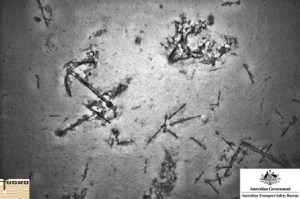
It wasn’t from the missing aeroplane, it was a shipwreck, but it proves the sonar kit they are using can find MH370 if they look in the right place.

One of the oceanic survey vessels, Fugro Equator, found small sonar contacts that looked like man-made equipment. Fugro Supporter was sent back to have a closer look using the autonomous underwater vehicle (AUV).

ATSB’s Peter Foley, Director of the Operational Search for MH370 said: “It’s a fascinating find, but it’s not what we’re looking for.

“Obviously, we’re disappointed that it wasn’t the aircraft, but we were always realistic about the likelihood. And this event has really demonstrated that the systems, people and the equipment involved in the search are working well. It’s shown that if there’s a debris field in the search area, we’ll find it.”

They’ve passed the sonar data to marine archaeologists who may have to search back many decades to work out which vessel it was because, from the debris, it looks as if it was a coal-burning ship.

Seabed wreckage 3,800m beneath the waves

But there’s more.

Remember Capt Simon Hardy, the Boeing 777 captain and mathematician who worked out where MH370 is most likely to be? Flightglobal published his calculations last December.

The ATSB called Hardy to meet them in Canberra on 15 May, and the plan was that he was to visit the survey ships in Fremantle on 20 May. This will all have happened by now. The ATSB have demanded that Hardy not disclose any discussions, although I can’t see what purpose secrecy would serve. Perhaps they just want to control the release of information themselves.

But now we know the AUV can detect even small debris, all we are waiting for is for them to find MH370.

It will just be interesting to see how close the MH370 wreck is to Hardy’s refined predictions, which he will have been sharing with the ATSB.

That A400M fatal crash

The big military transport aircraft, not long off the production line and bound soon for the Turkish Air Force, crashed shortly after take off from from Seville San Pablo airfield.

Airbus Military said four of its test crew were killed and two severely injured. All six are Spanish.

It was a warm day with good conditions. So why?

My struggle with this tragic event is that it is such a surprise. The A400M is a heavily-tested type, not just airborne-tested but tried and stressed for years on the manufacturer’s “Iron Bird” racks. There should be no surprises.

Nowadays new Boeings and Airbuses don’t crash during a normal take-off unless something really unusual and therefore unexpected goes wrong. What was it?

They’ll soon tell us.

The aeroplane is a good one and will do well. Airbus Military will survive this. The families are the ones I feel sorry for.

Germanwings interim report from BEA

French accident investigator BEA, in today’s interim report on the 24 March suicide crash in the Alps, tells us what we already know about the fatal flight itself, but in greater detail.

It has, however, added some information from the flight data recorder about the first flight that day. Remember, this aircraft and the same crew took off from Dusseldorf that morning for Barcelona, but it was on the return trip later that the copilot took the fatal action he planned.

The detail the BEA provides on a particular couple of minutes during the outbound flight is – In the light of what we know eventually happened – chillingly macabre, but pretty pointless in terms of what action could usefully be taken as a result of knowing it.

With the aircraft in the cruise at FL370 (37,000ft) over France, the captain leaves the flight deck, so the copilot is in control. At that moment the aircraft is handed over from Paris air traffic controllers to the Bordeaux sector, and they tell the crew to descend to 35,000ft. The copilot acknowledges this, sets 35,000ft in the flight control unit of the autopilot, and executes that selection so the aircraft begins its 2,000ft descent.

What happens next is the weird part. The copilot then dials the FCU altitude all the way down to 100ft, then all the way up to 49,000ft – but does not pull the button to execute either of the extreme settings, so the original 35,000ft selection is still in charge. Then he returned the selection to 35,00ft again anyway, just before Bordeaux gave another descent instruction to FL210 (21,000ft), which the copilot selected. But having done so, he indulged in another dialling exercise, again selecting 100ft – the fatal altitude selected to cause the crash in the alps. Then, however, he returned it to the cleared altitude.

Just after that the captain buzzed to re-enter the cockpit, and the copilot admitted him.

So what does this little apparent mental rehearsal tell us? That emotionally unbalanced people experiment with ideas before carrying them out? That is not new information.

But his experiment has now been discovered, so maybe flight data monitoring would predict other such events. Could it?

Pilots under high workload with multiple tasks to perform and monitor can easily dial straight through the intended altitude on the FCU because their attention was distracted, then have to reset it. What are we to make of that in the future?

Hindsight is so easy.


Learmount is dead, long live Learmount.com

Followers of the Flightglobal blog “Learmount”  – which will soon slide gently into the great digital graveyard – welcome to my new site.

This one will offer much the same as my Flighglobal blog did. It’ll certainly serve the same audience – namely aviation’s front-liners – discussing news that affects their lives and profession.

Why the change?

I am maintaining my links with Flightglobal and Flight International as their Consulting Editor, but after many happy years there I’ve now got my P45 and my independence.

I hope you’ll find this space useful, and enjoy it as well.

Let’s aviate, navigate and communicate.